The Platform That Ate Parramatta Road
Somewhere between 2020 and now, Facebook Marketplace became Australia’s default used car platform.
Not Carsales. Not Gumtree. Facebook. The social network your parents use to share family photos.
Open any conversation about buying or selling a car in Australia today and the first question isn’t where should I list it? It’s have you checked Marketplace? The shift happened so quietly that most people didn’t notice until Gumtree started feeling like a ghost town.
This isn’t just a story about platform competition. It’s a case study in how design decisions, network effects, and algorithmic distribution can reshape an entire industry. And what happens when a trillion-dollar company decides your market is worth owning.
The Numbers Don't Lie: Gumtree Is Dying
When someone in a Sydney Startups Facebook group asked “Has Marketplace trumped Carsales already?” the comments told the whole story.
“I listed a BMW and Honda on Carsales, barely got any hits. Listed on FB Marketplace in 2 weeks with 100+ messages.”
“Never heard of carsales. Sold my car on Facebook, bought my car on Facebook. Never spent on any ads.”
“Gumtree was bought out by eBay and faded into irrelevancy. Marketplace rose as the default.”
The data backs this up. Facebook Marketplace now has over 1 billion monthly users globally. In Australia, the pattern is clear: items that sat on Gumtree for months sell in days on Marketplace. Sellers report getting 10x to 100x more views on Facebook compared to traditional classifieds.
Meanwhile, Gumtree’s traffic has been flat or declining. Under new ownership since October 2024, the platform is attempting a comeback. Their chief consumer officer admitted the brand “hasn’t been growing for years.” They’ve increased marketing investment by 50% and hired 100+ product engineers. But momentum is hard to recapture when your competitor is embedded in an app people already open 50 times a day.
Why Facebook Won: A Design Masterclass
From a design and technology perspective, Facebook Marketplace didn’t win by accident. It won because Meta made a series of UX decisions that purpose-built classifieds platforms couldn’t match.
1. Zero friction listing. You’re already logged into Facebook. Listing a car takes 60 seconds. No new account. No email verification. No app download. Gumtree requires a separate login. Carsales makes you jump through hoops to even get started.
2. Profile transparency. When someone messages you on Marketplace, you can click their name and see their actual Facebook profile. How long have they had it? Do they have mutual friends? Do they look legitimate? This pseudo-verification creates more trust than an anonymous Gumtree listing, even though it’s imperfect.
3. Integrated messaging. Communication happens in Messenger, the same app people already use for group chats with friends. No switching between platforms. Notifications are instant. Compare this to Gumtree’s clunky email-based system.
4. Algorithmic distribution. Facebook doesn’t just list your car. It actively pushes it to people browsing Marketplace in your area. You don’t need to pay for visibility. The algorithm handles discovery based on location, interests, and browsing history.
5. Social sharing. Listings can be shared to local community groups, car enthusiast groups, and even personal profiles. Word-of-mouth distribution is built in.
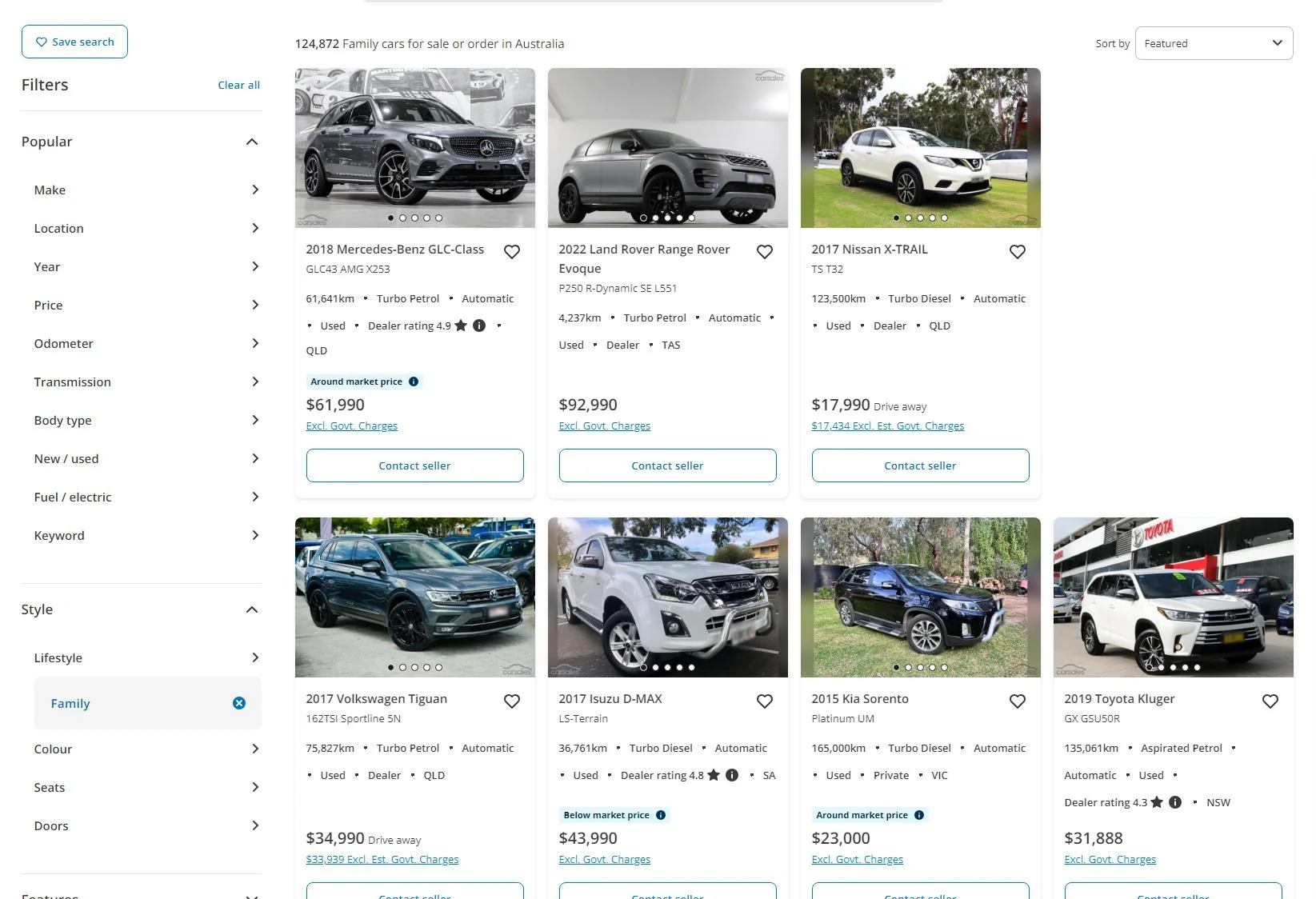 Carsales remains the professional choice with 124,000+ family cars listed, but dealers dominate the platform
The Flipper Problem: Why Multiple Listings Are a Red Flag
Here’s where Facebook Marketplace’s openness becomes a liability.
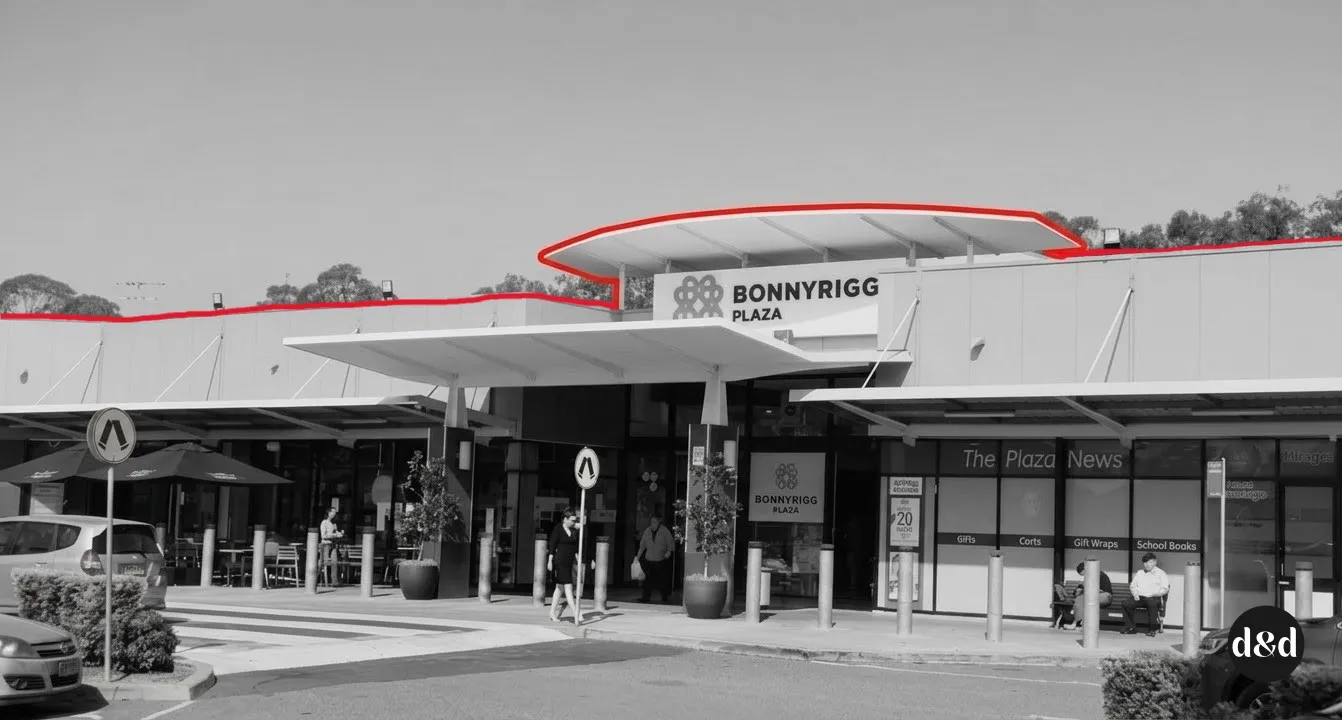
Scroll through car listings in any Western Sydney suburb (Blacktown, Liverpool, Parramatta) and you’ll notice a pattern: the same sellers appear again and again with multiple vehicles.
These are flippers. They buy cheap, do minimal work (maybe a detail, maybe hiding bigger problems), and resell for profit. It’s essentially unlicensed car dealing operating in a legal grey zone.
The problem? Every incentive points toward cutting corners. A flipper doesn’t care if the car breaks down six months later. They’ve already moved on. They’re not offering statutory warranties. They’re not conducting roadworthy inspections beyond what’s legally required to transfer registration.
The golden rule for Marketplace buyers: Before you message anyone, click on their profile and check what else they’re selling. If you see five or six cars listed, you’re not dealing with someone offloading their daily driver. You’re dealing with someone who does this for a living.
“Click the photo of the person selling the car. If they have multiple cars listed, they’re really just flipping cars. Someone selling a single car is more trustworthy because they’re selling their own personal beloved vehicle.”
Chaya Milchtein, automotive educator
An ACCC report from December 2025 flagged exactly this issue: licensed dealers are using Gumtree and Facebook Marketplace to sell cars from private residences, deliberately misleading consumers into thinking they’re buying from a private seller when they’re not.
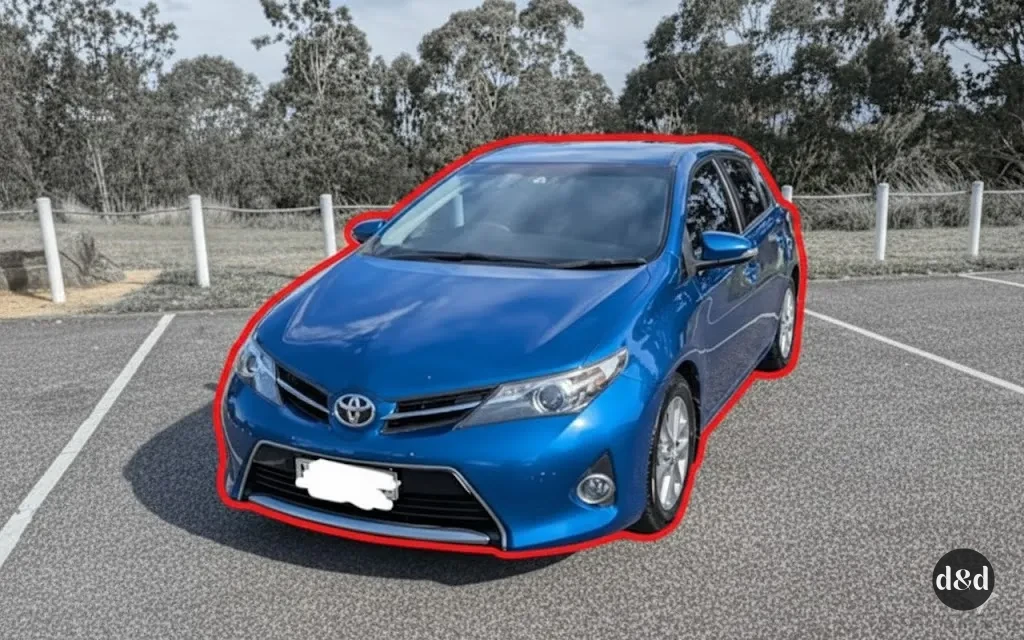
 Typical flipper inventory: a rotation of budget sedans and SUVs bought cheap, detailed, and relisted at markup
The Scam Landscape
Scams on Facebook Marketplace and social media platforms contributed to Australians losing $93.5 million in 2023, according to the ACCC. Car sales are a prime target.
Common tactics include:
- Sellers claiming to be military personnel being deployed, needing a quick sale
- Divorcees claiming they need to offload a settlement car urgently
- Requests for “holding deposits” before viewing
- Moving conversations off-platform to email or WhatsApp
- Fake escrow services and transport companies
The first quarter of 2025 saw $259 million in scam losses reported to Scamwatch overall. Shopping scams (which include vehicle sales) were the most reported category with financial loss.
Where Dealerships Still Win
Despite Marketplace’s dominance, legitimate used car dealerships aren’t going anywhere. They’ve just had to rethink their value proposition.
Under Australian Consumer Law, licensed motor dealers must provide statutory warranties on vehicles under a certain age and mileage threshold. This isn’t optional. It’s the law. For NSW, that means 3 months or 5,000km (whichever comes first) on vehicles under 10 years old with less than 160,000km.
For risk-averse buyers, this warranty alone can justify paying dealership prices. Add in:
- PPSR checks (verifying no outstanding finance)
- Professional inspections
- Cooling-off periods
- Recourse if something goes wrong
And suddenly the $2,000-$3,000 premium over private sale prices starts making sense.
Carsales, the ASX-listed platform, continues to thrive despite Marketplace’s rise. They reported $579 million revenue in H1 2025, up 9% year-on-year. Their play? Focus on dealers, data services, and finance integration. Let Facebook have the private-party chaos; Carsales owns the professional transaction layer.
Platform Comparison: Where Should You Actually Buy or Sell?
| Platform | Strengths | Weaknesses | Best For |
|---|---|---|---|
| Facebook Marketplace | Massive reach, free to list, profile transparency, instant messaging | No moderation, flipper problem, scam risk, desktop search is slow | Private sellers wanting quick sales, buyers with inspection skills |
| Carsales | Professional listings, dealer warranties, finance integration, PPSR data | Expensive listing fees (~$100+), dealer-dominated, overwhelming filters | Buyers wanting dealer protection, sellers of premium vehicles |
| Gumtree | Simple interface, familiar brand | Declining traffic, anonymous sellers, dated UX | Shrinking audience; rarely the best choice now |
| eBay Motors | Auction format, buyer protection | Small Australian market, niche audience | Specialty/collectible vehicles only |
How to Not Get Scammed: A Quick Checklist
If you’re buying on Marketplace, protect yourself:
✓ Check seller’s profile. Long-established? Friends? Photos? Or created last month with no activity?
✓ Look for multiple car listings. More than one usually means a flipper. Proceed with caution.
✓ Run a PPSR check. $2 tells you if there’s outstanding finance or if it’s been written off. Do this before handing over money.
✓ Ask for logbooks. Full service history is the single best indicator of a well-maintained car.
✓ Inspect in person. Never buy sight-unseen, no matter how good the story sounds.
✓ Get a pre-purchase inspection. $150-$300 for a qualified mechanic to find problems you can’t see.
✓ Look under the car. Oil leaks, rust, and suspension issues are often hidden from listing photos.
✓ Meet at a public place. Don’t go to a stranger’s house alone.
✓ Use PayID or bank transfer at settlement. Never send deposits to “hold” a vehicle.
What Facebook Should Do (But Won’t)
Marketplace has a moderation problem Facebook refuses to fix. Current approval processes are minimal. There’s no ID verification for sellers. No way to flag unlicensed dealers. No accountability when transactions go wrong.
If Meta wanted to clean up the car market, they could:
- Require ID verification for sellers listing vehicles above a certain value
- Integrate PPSR checks directly into listings
- Flag repeat sellers who might need licensing
- Accept liability for fraudulent listings
- Partner with inspection services for one-click pre-purchase checks
Will they? Almost certainly not. Marketplace generates revenue through zero-cost volume. Friction reduces listings. Meta has shown little appetite for the regulatory burden that comes with being a car marketplace.
The Gumtree Nostalgia
For Australians of a certain age, Gumtree was an institution. It’s where you found your first sharehouse, your first car, your first IKEA furniture. The green koala logo meant second-hand deals.
That era is over. Gumtree’s decline says something about how we live now: we don’t want separate apps for separate tasks. We want everything in one place. Facebook won because it was already there.
Whether that’s a good thing for car buyers is another question entirely.
Facebook Marketplace didn't disrupt used car sales with better technology. It disrupted them by removing the trust barrier: buyers can see the seller's real profile, mutual friends, and community history. The dealership's greatest advantage, trust, became its biggest vulnerability when social platforms made peer-to-peer trust free.
Key Takeaways
Facebook Marketplace dominates Australian used car sales. Higher reach, faster sales, and integrated messaging beat purpose-built classifieds.
Design won the platform war. Zero-friction listing, profile transparency, and algorithmic distribution made Facebook the default choice.
Car flippers are a growing problem. Check seller profiles for multiple listings before engaging.
Dealerships still matter for protection. Statutory warranties and legal recourse justify the premium.
PPSR checks are non-negotiable. $2 can save you $20,000 in hidden finance.
Scams are real and expensive. Australians lost $93.5M to social media scams in 2023.
Cite This Article
APA 7THReferences
Formatted in APA 7th Edition
- Australian Competition and Consumer Commission. (2025, December). Consumer issues in the sale of second-hand cars. ACCC. https://www.accc.gov.au/system/files/consumer-issues-second-hand-cars-dec-2025.pdf
- CarExpert. (2025, September 13). How scammers are targeting Australia's used car market. CarExpert. https://www.carexpert.com.au/car-news/how-scammers-are-targeting-australias-used-car-market
- Marketing Week. (2025, June 6). 'Recover its former glory': Gumtree plots brand revival amid increased investment. Marketing Week. https://www.marketingweek.com/gumtree-brand-revival/
- Mi3 Australia. (2025, February 10). Car Group reports 9% revenue growth in H1 2025. Mi3. https://www.mi-3.com.au/10-02-2025/car-group-reports-9-revenue-growth-h1-2025
- National Anti-Scam Centre. (2025, March). Targeting scams: Report on scams data and activity 2024. ACCC. https://www.scamwatch.gov.au/research-and-resources/targeting-scams-report