Picture 200 clinics. Each one running its own booking system, its own customer records, its own marketing. The phones ring constantly. Staff split their time between treating clients and answering calls. Headquarters in North Sydney can see the brand growing, but has almost no visibility into what’s actually happening across the network.
That was Laser Clinics Australia before they built a centralised digital platform. Today, 16% of all bookings happen online with zero staff involvement. The phones still ring, but less. And for the first time, the company has a single view of its 900,000 customers.
This is not a beauty tech story. It’s a franchise operations story told through digital transformation, and the lessons apply to any business running multiple locations without unified systems.
The Silo Problem: what 200 independent operations actually looks like
Laser Clinics Australia opened its first clinic in Sydney in 2008. By the time KKR acquired a majority stake in 2017 for A$650 million, the network had grown to around 80 locations. Today it operates over 200 clinics across Australia, New Zealand, the UK, and Singapore, with more than 2,500 employees and a customer base that hit 900,000.
The growth was extraordinary. The infrastructure underneath it was not.
I call this the Silo Problem, and it’s common in fast-growing franchise networks: each location operates as its own island. They share a brand, but not much else. Booking systems are independent. Customer records are duplicated across locations. Marketing campaigns get run locally with no coordination. When someone visits the Bondi clinic on Tuesday and the Neutral Bay clinic on Thursday, neither location knows about the other visit.
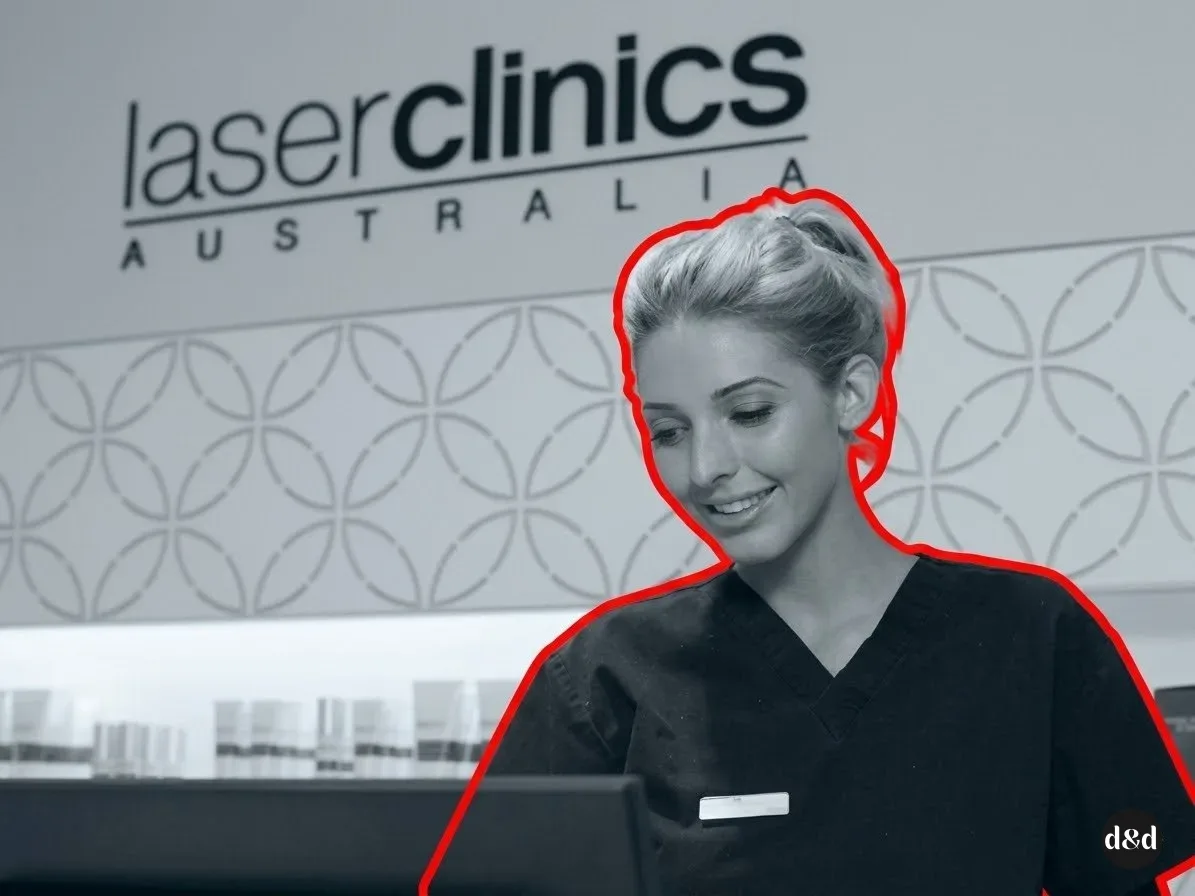
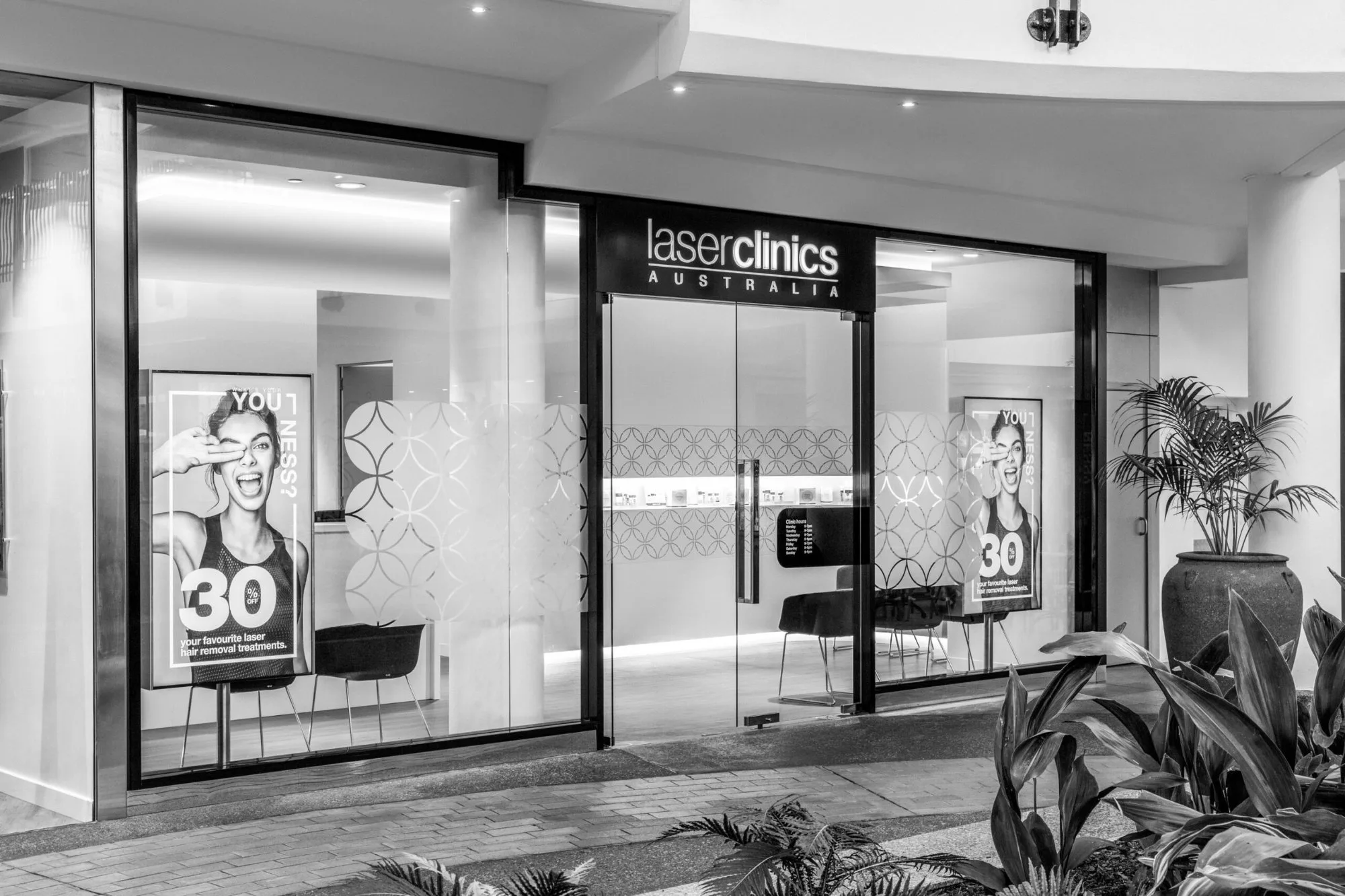 A Laser Clinics Australia franchise location. Over 200 clinics now operate under the brand globally. Source: Laser Clinics Australia
For headquarters, the problem was strategic. You can’t optimise a network you can’t see. Which locations are underperforming? Which treatments are growing fastest? Where is customer demand outstripping capacity? Without unified data, these questions get answered by anecdote, not evidence.
For individual clinics, the problem was operational. Therapists who should be focused on treatments were fielding booking calls. Rescheduling happened over the phone. No-shows were hard to manage without automated reminders. And customers who wanted the convenience of booking at 10pm on a Sunday simply couldn’t.
The 16% Shift: when bookings start handling themselves
Laser Clinics partnered with Optimizely and Microsoft to build a unified digital platform. They chose Optimizely Commerce Cloud for the customer-facing booking experience and Microsoft Dynamics 365 as their CRM, giving them the single customer view they’d been missing.
The rollout happened fast: from having no digital booking capability to a live platform in under six months.
The headline number is this: 16% of all bookings now come through the website with no staff involvement. That might sound modest compared to fully digital businesses, but for a franchise network where every booking historically required a phone call, the impact compounds quickly.
Here’s the Phone Reduction Test I use for evaluating these kinds of shifts:
| Metric | Before Platform | After Platform |
|---|---|---|
| Booking method | Phone only | Phone + 16% online |
| Staff split | Treatment + calls | More treatment, fewer calls |
| After-hours booking | Not possible | Available 24/7 |
| HQ customer visibility | Per-clinic only | Single customer view |
| Marketing coordination | Local, fragmented | Centralised automation |
The Optimizely case study describes the in-clinic difference as subtle but real: the phone rings less, staff are more attentive, and the physical environment improves for customers who are actually there. That’s the kind of second-order effect that doesn’t show up in a pitch deck but matters enormously for customer retention.
The Single Customer View: why 900,000 connected records change the business
Before the platform, Laser Clinics had customer records scattered across locations. Duplicate records were everywhere. If a client moved suburbs, they essentially became a new customer to the new clinic.
Microsoft Dynamics 365 changed this. For the first time, headquarters could see a unified profile for each of its 900,000 customers: which clinics they visited, which treatments they booked, how often they returned, and what drove them to book.
This is what I call the Network Intelligence Principle: the value of customer data in a franchise isn’t in what one location knows about one client. It’s in what the entire network knows about all of them.
The marketing automation built on top of Optimizely connected those 900,000 customers with targeted campaigns across web, mobile, and email. Conversion rates hit 2.16%, above industry benchmarks. And with 80% of site traffic coming from mobile, the platform was built for how the audience actually browses: on their phones, often outside business hours.
The Franchise Paradox: why scale makes digital transformation harder, not easier
Most digital transformation stories follow a simple arc: company identifies problem, builds solution, problem solved. Franchise networks don’t work that way.
Laser Clinics runs a 50/50 partnership model. Each franchise location is co-owned by the franchisee and the company, with costs shared between them. This creates alignment on financials but also means that any major technology change needs buy-in from hundreds of individual business operators, not just a CEO and a board.
The Optimizely case study mentions this directly: the platform roadmap was developed alongside 100 franchise partners. That’s 100 separate business owners who each needed to understand why a centralised booking system served their interests, not just headquarters’ interests.
This is the Franchise Paradox: the more locations you have, the more you need centralised systems, but the harder those systems are to implement because each location is its own business with its own operator and its own concerns.
Laser Clinics navigated this by focusing on outcomes franchisees could feel: fewer phone calls, more time with clients, bookings that came in overnight. The value proposition wasn’t “we’re centralising your data.” It was “your phone will ring less and you’ll have more customers when you open in the morning.”
The $650 Million Question
KKR didn’t pay A$650 million for a chain of beauty clinics. They paid it for a franchise model that could scale internationally with the right digital infrastructure underneath it.
The investment thesis is visible in what happened next. Laser Clinics expanded from 80 Australian locations at the time of acquisition to over 200 globally. They entered the UK, New Zealand, and Singapore. In FY2023 alone, the network performed over 3 million treatments and welcomed 229,000 new clients.
None of that scales without the platform. You can open clinics in new countries, but without centralised booking, unified customer data, and automated marketing, each new location just adds another silo. The digital platform isn’t a feature of the business. It’s the infrastructure that makes international expansion possible.
The Australian cosmetics treatment market hit $1 billion in spending back in 2017. It’s only grown since. For franchises operating in this space, the question isn’t whether to build centralised digital systems. It’s how quickly they can get there before competitors who already have.
Under the hood
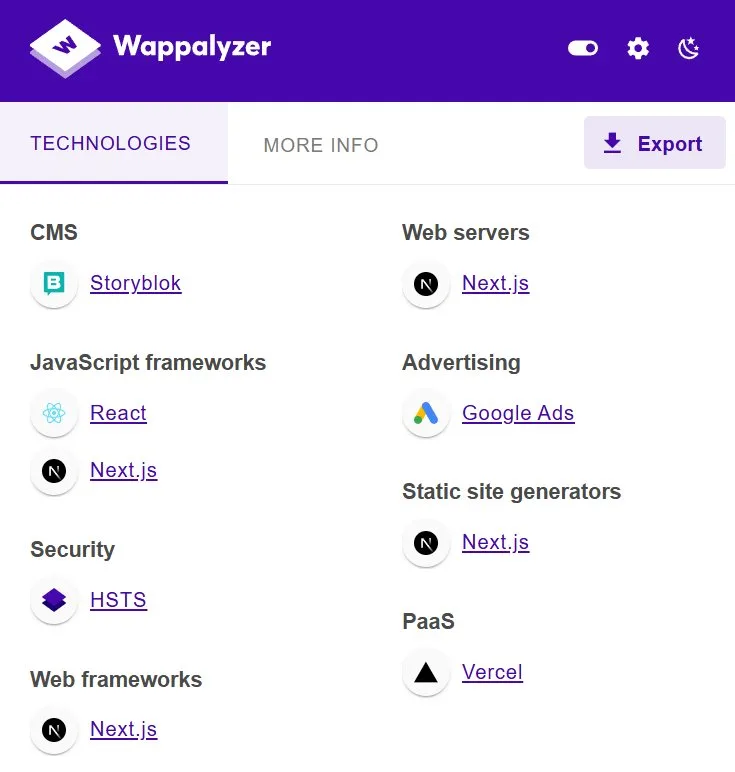 Tech stack captured via Wappalyzer on landing page only.
The customer-facing website runs on Next.js with React, hosted on Vercel, using Storyblok as the headless CMS. That’s a modern, performant setup: server-side rendering for SEO, a component-based frontend for rapid updates, and a headless CMS that lets marketing teams publish content without touching code.
What’s working well:
- Next.js on Vercel is fast and scalable, exactly what you want for a high-traffic booking funnel
- Storyblok as headless CMS gives content flexibility without the weight of a traditional WordPress setup
- HSTS enforced, showing proper security headers
- Google Ads integration suggests active paid acquisition alongside organic
Room for improvement:
- No visible analytics tools beyond Google Ads on the landing page (though these may load conditionally or sit behind the booking flow)
- The real digital infrastructure, Optimizely Commerce Cloud and Dynamics 365, lives beneath this marketing layer and isn’t visible from a surface-level scan
When Laser Clinics finally connected 200+ franchise locations to a single platform, 16% of bookings started happening automatically with no staff involvement. The lesson isn't about booking software. It's about what becomes possible when a franchise network stops running as 200 separate businesses and starts operating as one.
This is my take: The website stack is genuinely well-chosen. But the story here is that the marketing site is almost a separate concern from the actual booking and CRM infrastructure. What Wappalyzer shows you is the shopfront. The business runs on the systems behind it.
Key Takeaways
Laser Clinics Australia isn’t interesting because they’re a beauty company that built a website. They’re interesting because they solved a franchise-scale coordination problem that most multi-location businesses are still struggling with.
The 16% online booking rate is a starting point, not a ceiling. The real value is in the unified customer view, the automated marketing, and the operational data that flows from having every location connected to the same platform.
-
The Silo Problem kills franchise networks quietly:
Every location running independently feels fine until you try to see the whole picture. Duplicate records, fragmented marketing, and no network-wide visibility are symptoms of a system that was never designed to work together.
-
The Phone Reduction Test reveals operational gain:
If 16% of bookings move online, that's 16% fewer phone calls interrupting treatments, 16% fewer scheduling errors, and bookings flowing in at 10pm when the clinic is closed. The compounding effect on staff experience is significant.
-
The Network Intelligence Principle changes strategic decisions:
A single customer view across 200+ locations turns anecdotal management into data-driven operations. Which treatments are growing? Where is demand shifting? What drives rebooking? You can't answer these questions from 200 separate spreadsheets.
-
The Franchise Paradox demands franchisee-first communication:
Technology rollouts in franchise networks fail when they're framed as HQ initiatives. They succeed when framed in terms franchisees care about: less admin, more clients, fewer missed bookings.
For any multi-location business still running independent systems across its network, whether that’s beauty clinics, dental practices, fitness studios, or retail chains, Laser Clinics’ transformation is worth studying. Not because the technology is exotic, but because the problem they solved is universal.
From one unified platform to one unified AI context
Laser Clinics unified 200 franchises onto one booking platform. That's why 16% of their bookings now happen automatically. The equivalent move for AI is unifying how your clinic is described, documented, and understood, so any model can work on it.
Generative AI can handle treatment enquiries, draft follow-ups, write pre- and post-treatment content, reply to reviews, and help with campaign content. It's already at the level of a strong admin with a marketing background. What it doesn't have is your clinic.
That's what we do at jopy.agency. We audit how your clinic runs and produce structured files: Brand-Positioning.md, Customer-Journey.md, Service-Blueprint.md, Operations-Model.md (to name a few).
What are Structured .md files?
Markdown (.md) is the cleanest and smallest file format that AI likes to read.
We audit businesses end to end, your operations, workflows, brand, customers, tech, etc., then write all of it into structured .md files.
Then you can use these structured .md files so ChatGPT, Claude, Gemini, or any chat-based LLM can read your business context properly for future, in-house vertical growth.
You can then use AI in-house for bookings, treatment content, client comms, pre- and post-care messaging, or whatever you want really.
Interested in AI Context Auditing? Visit Jopy.agencyInterested in AI Context Auditing?Cite This Article
APA 7THReferences
Formatted in APA 7th Edition
- Optimizely. (n.d.). Laser Clinics creates vibrant customer experiences. Optimizely Insights. optimizely.com
- KKR. (2017, September 1). KKR invests in Laser Clinics Australia in partnership with The Growth Fund. Business Wire. businesswire.com
- Laser Clinics Australia. (2025). Franchise opportunities. laserclinics.com.au
- Laser Clinics Australia. (2025). Our story. laserclinics.com.au
- PitchBook. (2017, August 29). Botox and bikinis: KKR buys Laser Clinics Australia for $650M. pitchbook.com
- Retail Beauty. (2022, November 2). Laser Clinics owner invests in US clinic chain SkinSpirit. retailbeauty.com.au