One agent on the Gold Coast sold 10 units in three months with an average of 34 days on market. In Surfers Paradise, where apartments typically sit for 180 days, that’s five times faster than the suburb average. He tracked almost 2,300 groups through virtual tour inspections across those 10 listings, including a significant proportion from interstate buyers who never set foot in the building until settlement day.
That agent was using Little Hinges. And the reason those numbers exist at all is because Little Hinges doesn’t just offer virtual tours. They offer virtual tours with analytics built on top, so agents can actually see who’s looking, how long they’re staying, and what they’re looking at.
It sounds like a small difference. It changes the entire sales conversation.
The Photo Gallery Problem
Here’s what most Australian property listings still look like: 12 to 20 static photos in a grid. Maybe a floor plan PDF. Maybe a 30-second video walkthrough if the agency has budget. The listing goes live, the agent waits for enquiries, and the open home happens on Saturday at 11am.
The problem isn’t that photos are bad. It’s that photos are one-directional. You put them up. People look at them. You have no idea who looked, what they focused on, or whether they left after two seconds or spent three minutes studying the kitchen.
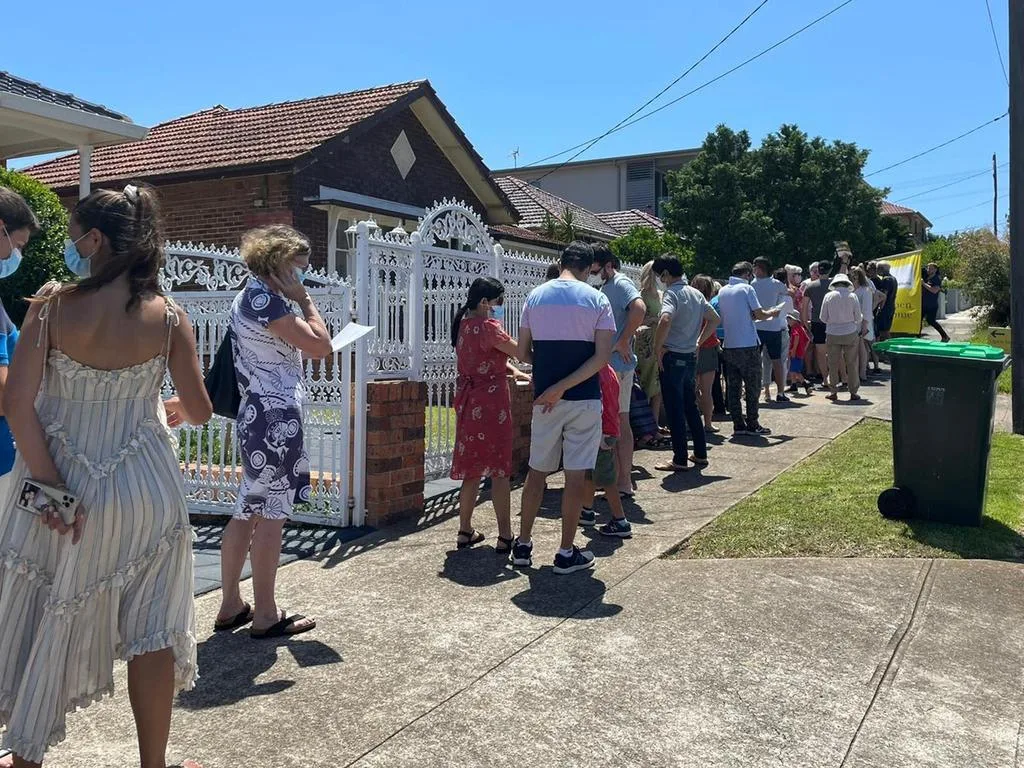 The Saturday open home queue. Virtual tours don’t replace this, but they pre-qualify who shows up. Source: Domain
Virtual tours flip this. A buyer in Melbourne can walk through a Sydney apartment at 10pm on a Tuesday. An interstate family relocating for work can shortlist three rentals without flying up. And critically, the agent can see all of this happening in real time.
That’s Little Hinges’ core insight. The tour itself is table stakes. The data behind it is the product.
The Insights Portal: what agents actually see
Little Hinges was founded in 2020 and has grown to become Australia’s largest virtual inspection and property marketing provider. They use Matterport Pro2 cameras, capture photography and floor plans in a single visit, and deliver everything by the next business day. Over 5 million people inspect property digitally through their platform every year.
But the thing that separates them from every other Matterport service provider is what they call the Insights Portal. It’s a real-time analytics dashboard that sits on top of every tour.
It tells agents things like how many people are virtually touring a property day by day and even minute by minute, what they look at while they’re there, how long they stay, where they’re visiting from geographically, and which real estate portals they found the listing on.
Josh Callaghan, the CEO, described it this way in a Matterport case study: if most visitors are drawn to the kitchen, the listing agent can lead with the kitchen in marketing materials rather than relying on anecdotal evidence from previous properties.
This is what I call the Behavioural Evidence Principle: the difference between guessing what buyers want and seeing what they actually do. Most real estate marketing is built on assumptions. The Insights Portal replaces assumptions with observed behaviour.
The 12 Million Data Point Study
In early 2026, Little Hinges published research based on behavioural data from more than 12 million virtual property inspections. The study examined how users move through spaces when given the freedom to explore without time pressure or agent-led direction.
This matters because it challenges some long-held assumptions about what buyers actually value. An agent-led inspection follows the agent’s narrative. A virtual tour follows the buyer’s curiosity. When you have 12 million examples of the latter, patterns emerge that the industry hasn’t seen before.
The Proptech Australia member spotlight on the research noted that for agents, developers and investors, it provides an evidence-based framework for prioritising renovation, staging and marketing efforts. Rather than relying on room counts or square metreage, it reflects what buyers genuinely spend time looking at.
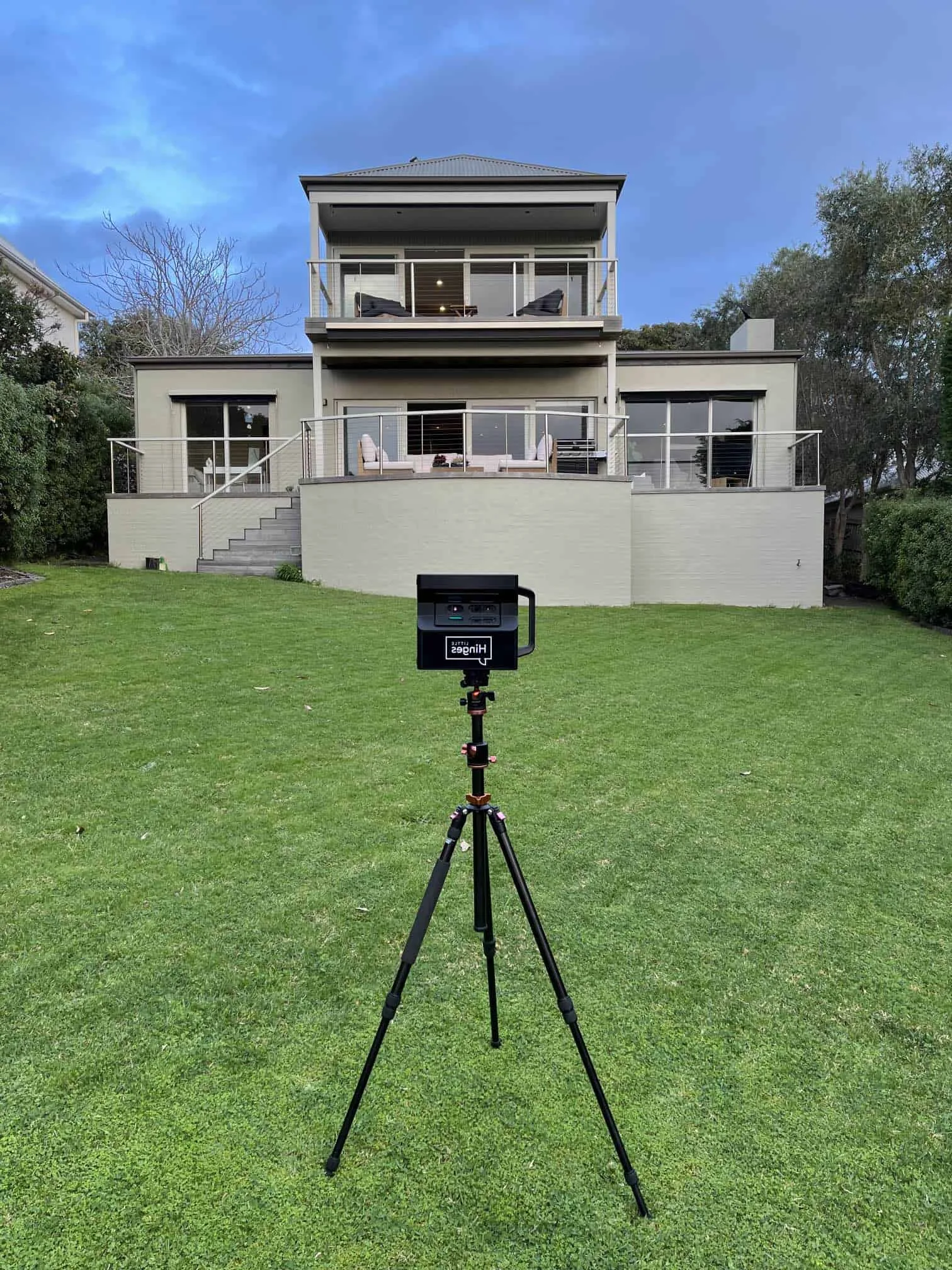 A Little Hinges Matterport Pro2 camera ready to capture a 3D digital twin of a property. Source: Little Hinges
The Interstate Buyer Phenomenon
This was referenced briefly in an earlier designand.dev article on hospitality 3D tours, but the real estate use case goes deeper.
During Queensland’s COVID-era interstate migration wave, Little Hinges data showed that a significant proportion of rental and sales enquiries came from people who couldn’t physically attend inspections. The Gold Coast agent mentioned at the top of this article tracked almost 2,300 groups through virtual inspections, many from interstate.
In a market where properties are receiving dozens of applications and going to auction within weeks, the ability to inspect from anywhere is not a nice-to-have. It’s a competitive necessity. For agents, it means more qualified buyers at the open home. For buyers, it means not wasting a Saturday driving to a property that looked good in photos but doesn’t work in person.
I think of this as the Pre-Qualification Effect: virtual tours don’t replace physical inspections. They filter them. The people who show up on Saturday have already walked through the property online. They’re further along in their decision-making. They ask better questions. They’re more likely to make offers.
What Solo Agents and Small Agencies Can Learn
Your notes mentioned that even solopreneur-type agents should be doing some version of this, and I agree. Not necessarily at Little Hinges’ level of analytics sophistication, but the underlying principle applies at every scale.
A 360-degree camera like the Ricoh Theta costs under $500. Matterport’s own capture app works with a modern smartphone. You won’t get the Insights Portal analytics or the professional DSLR photography, but you’ll get a walkable tour that buyers can access at any time. For a solo agent listing 10 properties a year, even basic virtual tours set you apart from the majority of listings that are still photo-only.
Here’s the Virtual Tour Adoption Ladder I’d suggest:
| Level | What You Need | Cost | What You Get |
|---|---|---|---|
| Basic | Smartphone + Matterport app | Free to low | Walkable tour, basic sharing |
| Mid | Ricoh Theta or similar 360 camera | ~$500 one-off | Better quality, more immersive |
| Professional | Little Hinges or similar provider | From $299/property | DSLR photos, Matterport Pro tour, floor plan, analytics, next-day delivery |
| Premium | Full package + virtual staging + drone | $500+ /property | Everything above plus aerial, twilight conversion, virtual furniture |
The point is there’s no excuse at any level. Even at the free tier, you’re offering something that most agents in your area probably aren’t.
Under the hood
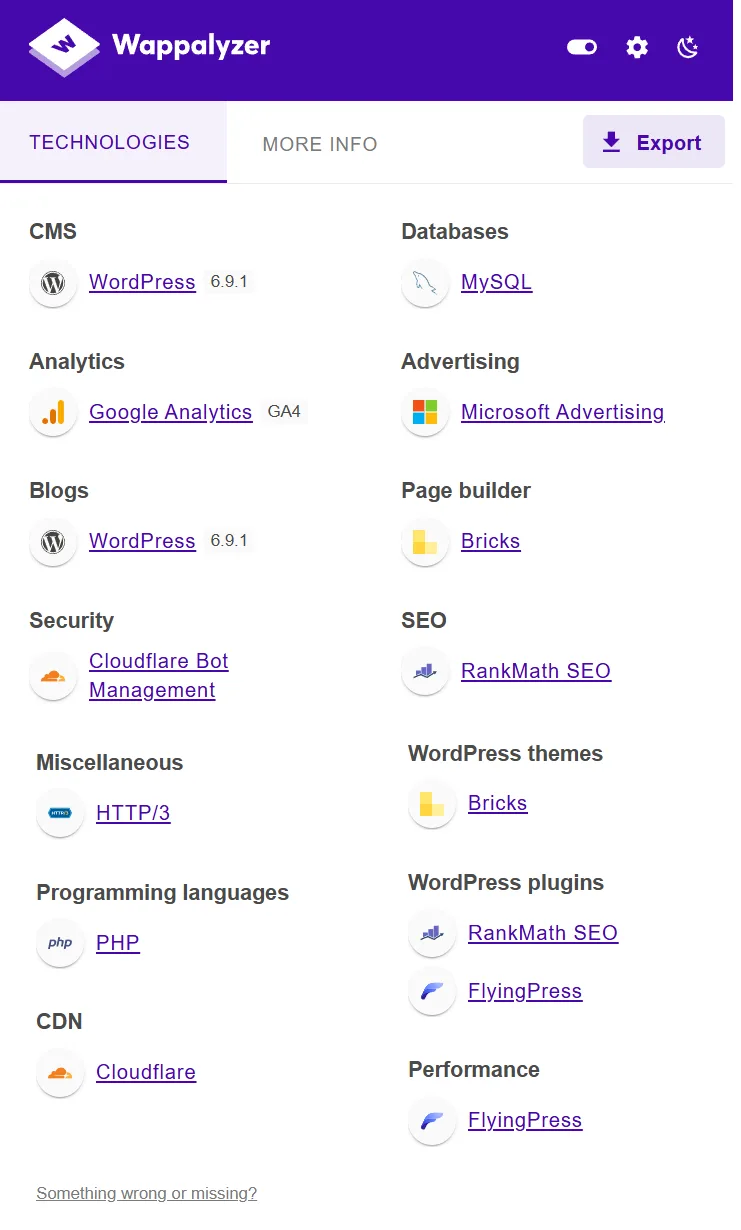 Tech stack captured via Wappalyzer on landing page only.
Little Hinges runs on WordPress 6.9.1 with the Bricks theme and builder, which is a developer-oriented WordPress setup that’s faster and more customisable than typical page builders like Elementor. RankMath handles SEO. FlyingPress manages performance optimisation. Cloudflare provides CDN and bot management. GA4 and Microsoft Advertising are running for analytics and paid acquisition.
What’s working well:
- Bricks Builder is a strong choice: faster than Elementor, cleaner code output, better for Core Web Vitals
- RankMath SEO + GA4 means they’re tracking both organic visibility and user behaviour
- FlyingPress for caching and performance is a smart plugin choice
- Cloudflare CDN + Bot Management for security and speed
- MySQL backend is standard and reliable for WordPress at this scale
Room for improvement:
- Microsoft Advertising but no Google Ads visible on the landing page, which is unusual for a B2B service targeting real estate agents (though Google Ads may load conditionally)
- No visible CRM integration on the marketing site, though the booking flow likely feeds into backend systems
Most virtual tour companies sell the tour. Little Hinges sells what the tour tells you: who viewed it, how long they stayed, which rooms they lingered in, and what drove the enquiry. For agents, the tour is the hook. The analytics are the product. That distinction is why they've processed 12 million inspections while competitors are still pitching 3D walkthroughs.
This is my take: This is a well-built WordPress setup. Bricks over Elementor, RankMath over Yoast, FlyingPress for speed. Someone who knows what they’re doing chose these tools. The marketing site is clean and fast, which matters when your audience is time-poor agents who will bounce if a page takes more than two seconds to load.
The Bottom Line
Little Hinges is interesting not because they offer virtual tours. Plenty of companies do that. They’re interesting because they treated the tour as the delivery mechanism and the data as the actual product.
In a market where properties are selling faster than ever and buyer competition is fierce, the agents who can show vendors real-time engagement data, not just “we had 30 people at the open home” but “247 groups inspected virtually this week, 68% spent more than 2 minutes, and 23% came back for a second look,” have a fundamentally different vendor conversation.
-
The Behavioural Evidence Principle changes the vendor conversation:
Agents who can show observed buyer behaviour, not guessed preferences, build more trust with vendors and make better marketing decisions. "Most visitors spent the longest time in the kitchen" is more persuasive than "I think the kitchen is the selling point."
-
The Pre-Qualification Effect makes open homes more efficient:
Virtual tours don't replace Saturday inspections. They filter them. The people who show up have already walked through the property online and are further along in their decision-making.
-
The Virtual Tour Adoption Ladder means there's no excuse at any level:
From free smartphone captures to full professional packages starting at $299, every agent, including solopreneurs, can offer some form of virtual inspection. Most in your area probably aren't. That's your advantage.
-
Analytics turn a marketing asset into a sales tool:
A virtual tour without analytics is a brochure. A virtual tour with analytics is a real-time campaign dashboard. The tour itself is table stakes. The data behind it is the product.
They say little hinges swing big doors. In real estate, the hinge is the data layer that most agents don’t know exists yet.
Cite This Article
APA 7THReferences
Formatted in APA 7th Edition
- Matterport. (2026). Little Hinges partners with Matterport and realizes 20 percent month-over-month growth. matterport.com
- Little Hinges. (2025). Virtual Tour Analytics & Insights Portal. littlehinges.com.au
- Proptech Australia. (2026). Member Highlight: Little Hinges' 3D tour data challenges traditional real estate assumptions. proptechaustralia.com.au
- Little Hinges. (2025). 3D Virtual Tours for Real Estate & Business. littlehinges.com.au
- Little Hinges. (2025). Virtual Tours for Real Estate Agency Principals. littlehinges.com.au