Type “red dress, beach wedding” into the Neuono app. Upload a selfie. Take two photos of yourself in tight clothing. Within seconds, an AI generates a custom garment designed specifically for your body measurements, skin tone, hair colour, and personal style preferences. Four weeks later, the dress arrives at your door.
This is not a concept video. The app launched in June 2025 and has already been downloaded over 30,000 times across Australia, the UK, and the US.
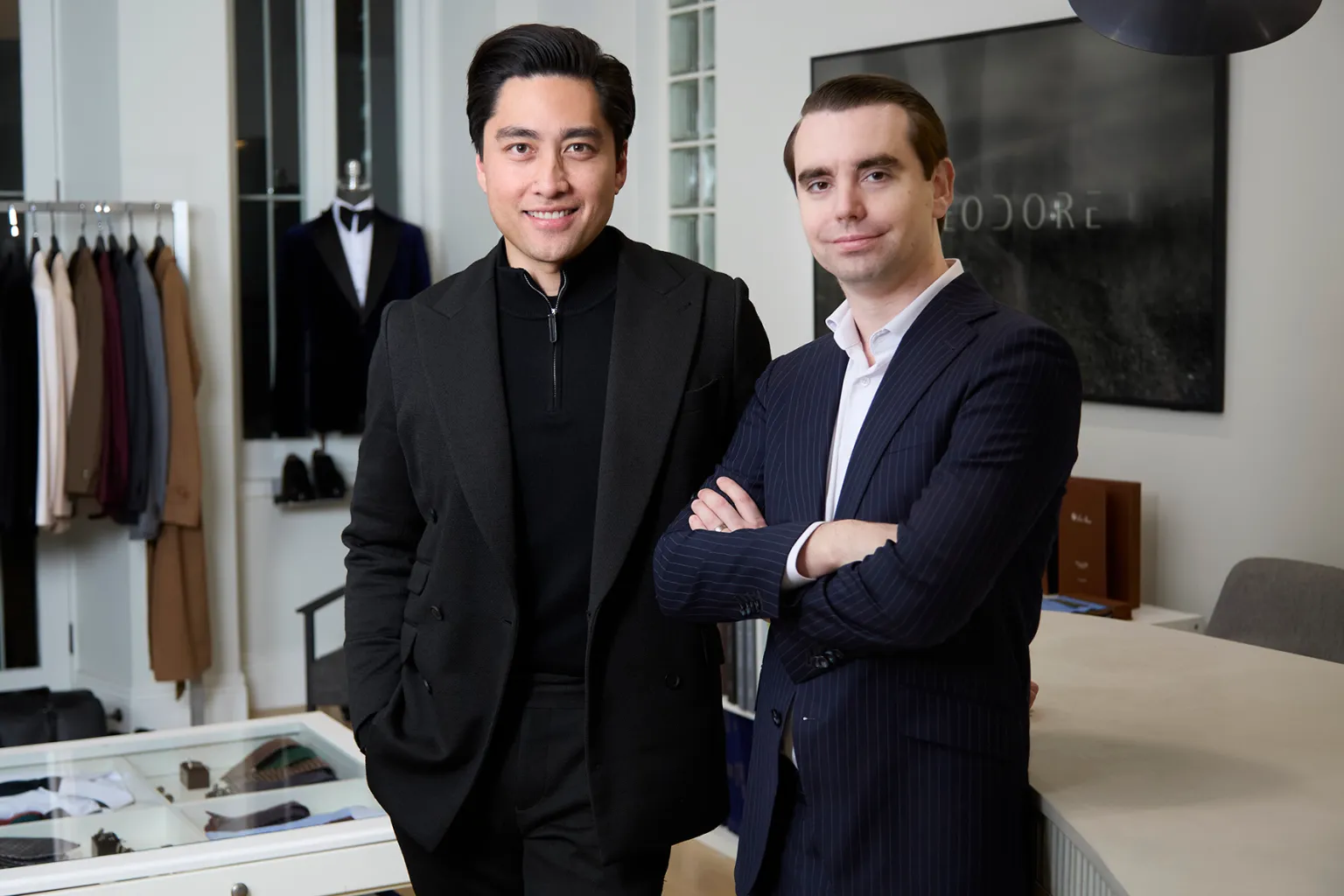
Behind it sits THDR Group, a Sydney fashion technology company founded in 2021 by Timothy Aquino and Sean Fagan. Their journey from a Surry Hills terrace house to New York Fashion Week reveals something important about where fashion and technology are heading, and what Australian startups can build when they stop waiting for permission.
From Photocopier Salesman to Fashion Tech Founder
Timothy Aquino studied psychology. Did not excel, by his own admission. Sold photocopiers door-to-door before finding his way into menswear styling, eventually advising NBA players, television personalities, and politicians in both Sydney and New York.
Sean Fagan spent 15 years in director and executive roles, teaching himself to code along the way. He is a member of the Australian Institute of Company Directors.
When COVID hit and both returned to Sydney, they moved into Aquino’s parents’ house and started building.
“It was a transitional time,” Aquino told Man of Many. “COVID was a catalyst, providing the perfect timing to start. Sean and I worked late nights, your typical startup journey. We’re still in the trenches, but the value of our work is evident.”
The first six months went entirely into developing a reliable way to measure bodies using just a smartphone. No tape measures. No fittings. No store visits.
The Technology Stack That Powers Neuono
The system they built combines several technologies that, individually, are not new. The combination is.
3D body scanning uses your smartphone’s camera to capture a front and side photo. The app analyses these images to generate over 100 precise data points, accurate within millimetres of what a professional tailor would measure in person. THDR claims 97.5% accuracy across 20,000+ completed scans.
SenseThread, their proprietary generative AI engine, takes those measurements and combines them with user preferences, demographic information, local weather data, and real-time fashion trend analysis. It then generates completely unique garment designs.
The AI pulls from foundational models by OpenAI and Google, layered with THDR’s own training data and engineering.
“We couldn’t have done what we are doing now even a year ago because of the advancements in AI,” Fagan told Business News Australia.
For a single jacket, the system can pull from over 70 billion combinations of fabrics, linings, threads, and buttons. Across the full product range, THDR claims 16 quadrillion possible construction variations.
How the Design Process Actually Works
The user flow is straightforward:
- Upload a selfie for facial analysis (skin tone, eye colour, hair colour)
- Take front and side photos for body measurements
- Enter a text prompt describing what you want (“boardroom outfit for 60-year-old man” or “garden party with young royals”)
- Review AI-generated designs with front and back views
- Customise details (colour, silhouette, length, fabric)
- Order for production and delivery
Rather than showing you wearing the garment (which users reportedly find off-putting), Neuono displays an idealised model who shares your physical characteristics.
Each design includes a rationale explaining why the AI made specific choices. Why this neckline works for your frame. Why these colours complement your complexion.
The system also learns. If you repeatedly reject garments with certain features, those get filtered out. Purchasing becomes the strongest signal of preference, building what THDR calls a “style fingerprint” over time.
The Manufacturing Reality
Designing garments is one thing. Making them is another.
“Other platforms can design you the dress,” Fagan told Forbes Australia, “but they can’t have it delivered to your door in under four weeks.”
THDR has partnered with five Chinese factories, each equipped to handle different garment types. Jeans. Summer dresses. Men’s suits. The company’s founders have visited China five times in the past 12 months, spending weeks at a time with manufacturing partners.
Every garment Neuono generates comes with a complete technical specification. The pocket in the image, the lapel, the hemline can all actually be produced.
Current turnaround is approximately five weeks from order to delivery. The average price is $400 AUD, varying by fabric and design complexity.
Why Made-to-Measure Matters
The pitch is not just convenience. It is sustainability through precision.
“We’ve built Neuono to solve two of fashion’s biggest challenges,” Fagan explains. “Poor fit and overproduction. By designing everything to order and to fit, we reduce waste and completely reshape the customer experience.”
No inventory sitting in warehouses. No unsold stock heading to landfill. Every garment is made for someone who already ordered it, in their exact size.
The company embeds NFC chips in every Theodore garment, creating digital product passports that authenticate ownership and track provenance. Aquino’s vision extends to generational inheritance: your children could one day scan your suit and see where you wore it, which significant events it witnessed.
“True sustainability for us is how long a product stays with the consumer and how it passes down generationally,” Aquino says.
From Surry Hills to New York Fashion Week
The Theodore brand (THDR’s luxury menswear line using the same underlying technology) has grown 50% year-on-year for three consecutive years.
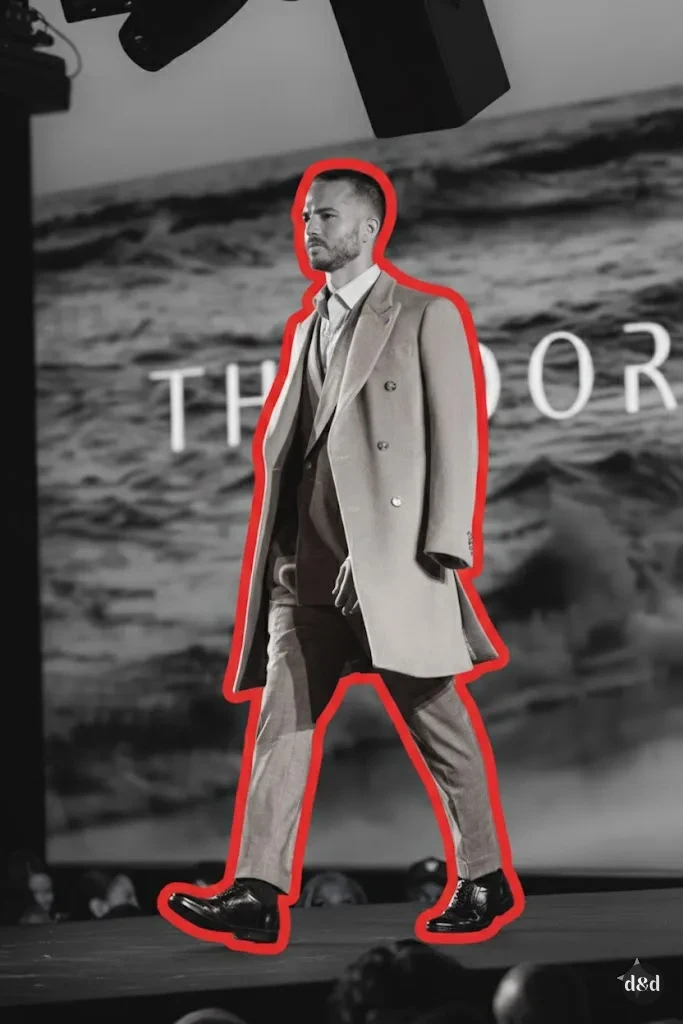
In September 2024, they showed at New York Fashion Week, taking the audience on a visual journey from Manhattan’s urban intensity to Sydney’s coastal ease. Teal jackets with wide-leg shorts. Pinstripe suits with Wallabees. Deep navy denim elevated beyond its humble origins.
Neuono made its own runway debut at NYFW in September 2025, showcasing what they call the world’s first AI-led fashion collection.
The company was selected for TechCrunch Disrupt’s Startup Battlefield (acceptance rate around 7%), joining alumni including Fitbit, Dropbox, and Cloudflare. They won the Australian Startup of the Year Award in 2024 and became a Microsoft for Startups Founders Hub member.
The Business Model Question
THDR remains almost entirely bootstrapped. Fagan coded the app and backend systems himself. They still own close to 100% of the business, aside from a small convertible note and an employee share option plan.
“It’s made us scrappy,” Fagan says. “But efficient.”
Theodore funded Neuono’s development. Now Neuono is meant to scale the model.
The direct-to-consumer approach is deliberate, but Fagan acknowledges the B2B opportunity. International fashion brands have already expressed interest in licensing the technology for their own products.
“We have gone the direct-to-consumer route, building our brand and our technology, but that doesn’t mean there isn’t a B2B play here as well,” Fagan says. “We already have received pretty healthy demand from other fashion brands but at the moment we are focusing on the consumer play because there is a large addressable market there alone.”
Neuono's AI doesn't design clothes. It generates 16 quadrillion possible outfit combinations from existing garments, then uses data to surface the ones most likely to resonate. The tailor's eye still matters. But the tailor's eye, augmented by an AI that's seen every combination, produces something neither could alone.
What This Means for Fashion's Future
The thesis is provocative: the future of fashion is made-to-measure instead of ready-to-wear.
Not everyone agrees. Fagan himself is not claiming the end of traditional fashion design. “We think this is just an additional way for people to buy clothes.”
But the implications of the technology extend beyond THDR. If smartphone-based body scanning achieves consistent accuracy, the entire sizing system that fashion has used for a century becomes optional. If AI can generate designs that match individual preferences at scale, the role of the designer shifts from creating garments to training systems.
The five-year timeline Fagan describes includes automated factories onshore and nearshore, eliminating the current four-week turnaround. “That’s a Series A or Series B sort of problem that we want to solve.”
The Surry Hills Studio
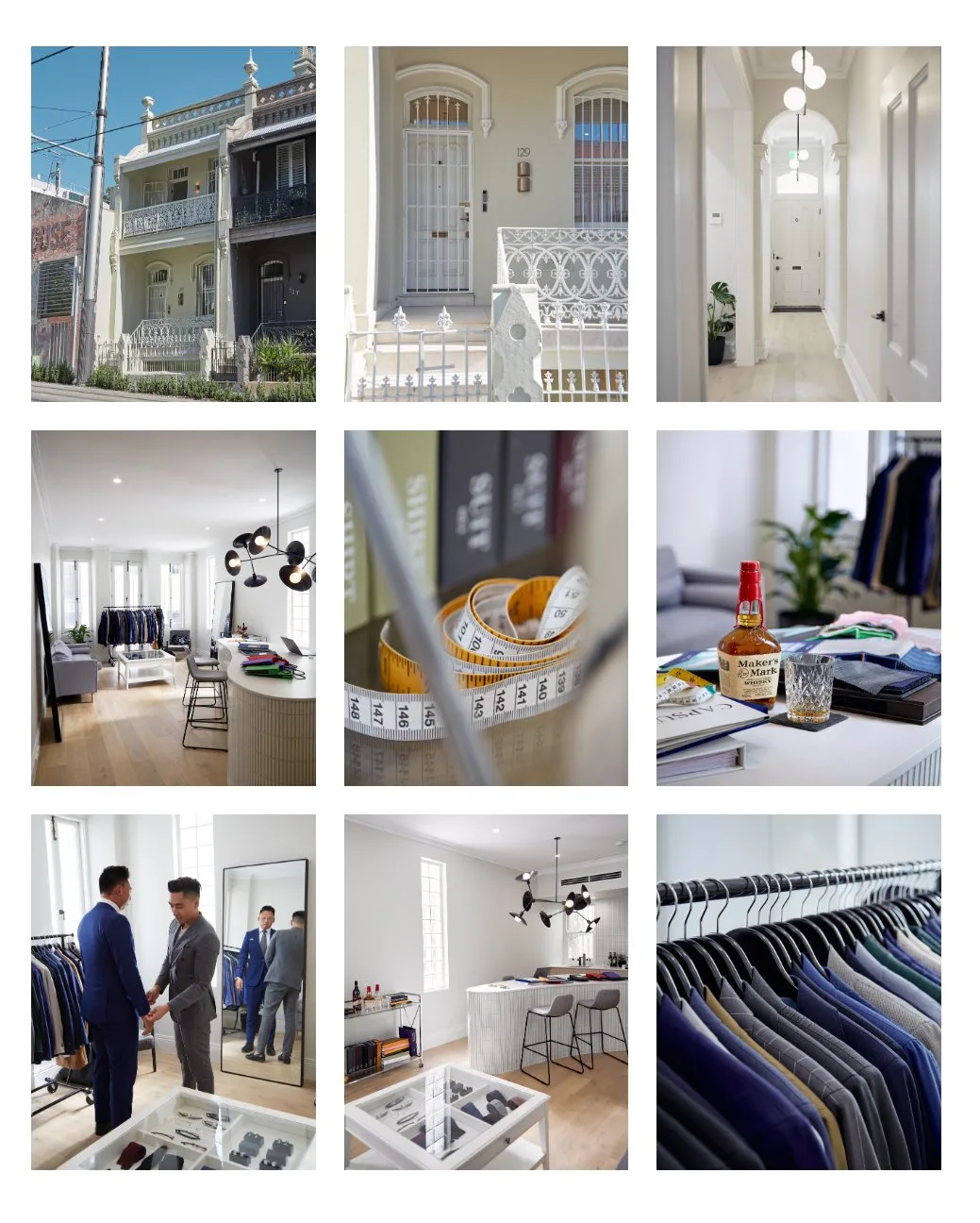
THDR’s physical home is a heritage terrace house at 129 Commonwealth Street in Surry Hills, three minutes from Central Station. White walls. Modern chandeliers. Racks of suits. A bottle of Maker’s Mark for clients.
The contrast is intentional. Traditional tailoring craft in a heritage building, powered by technology that could make the building unnecessary.
“We wanted to bring the craftsmanship of traditional tailoring into the modern age,” Fagan says, “making it faster, easier, and more accessible, while still delivering a luxury-level fit.”
The Neuono app is available now on the App Store and Google Play.
Key Takeaways
-
97.5% measurement accuracy from a smartphone:
THDR's body scanning technology captures over 100 data points from two photos, matching what a professional tailor measures in person.
-
16 quadrillion possible garment combinations:
The SenseThread AI engine combines fabrics, linings, threads, buttons, and silhouettes into truly unique designs for each customer.
-
Sustainability through made-to-order:
No inventory, no unsold stock, no landfill. Every garment is made for someone who already ordered it, in their exact size.
-
Bootstrapped to NYFW:
Almost entirely self-funded, THDR proved the model with Theodore before scaling with Neuono—founders still own close to 100%.
-
NFC chips create digital product passports:
Each garment carries its provenance, enabling generational inheritance and authentication.
What AI changes for small fashion and retail brands
THDR's Neuono didn't work because they had more AI, it worked because they fed the AI the full picture of their brand and their customer. That's the pattern worth stealing for any small fashion or retail operation.
Generative AI is levelling the playing field faster than most people realise. It can already write product descriptions, draft campaigns, respond to customer queries, and help plan ranges at the level of a good freelance creative. The only thing it doesn't have is real context about your brand.
That's what we do at jopy.agency. We audit your business and produce structured files: Brand-Positioning.md, Customer-Journey.md, Product-Marketing.md (to name a few). Once that's done, any LLM you use understands how you actually operate.
What are Structured .md files?
Markdown (.md) is the cleanest and smallest file format that AI likes to read.
We audit businesses end to end, your operations, workflows, brand, customers, tech, etc., then write all of it into structured .md files.
Then you can use these structured .md files so ChatGPT, Claude, Gemini, or any chat-based LLM can read your business context properly for future, in-house vertical growth.
You can then use AI in-house effectively for product copy, launches, marketing, customer comms, or whatever you want really.
Interested in AI Context Auditing? Visit Jopy.agencyInterested in AI Context Auditing?Cite This Article
APA 7THReferences
Formatted in APA 7th Edition
- Whittaker, M. (2025, June 10). From Aussie suits to AI couture: The startup trying to reinvent fashion in five days. Forbes Australia. https://www.forbes.com.au/news/entrepreneurs/from-aussie-suits-to-ai-couture
- Business News Australia. (2025, October 14). THDR Group launches 'hyper personalised' fashion app Neuono. https://www.businessnewsaustralia.com/articles/thdr-group-persoanlised-fashion-app-ai-neuono.html
- Dynamic Business. (2025, October 21). This Australian fashion startup says your smartphone can measure you as well as a tailor. https://dynamicbusiness.com/featured/this-australian-fashion-startup-says-your-smartphone-can-measure-you-as-well-as-a-tailor.html
- Man of Many. (2025, April 13). Meet THEODORE, the Aussie Tailor Transforming Suits into Heirlooms. https://manofmany.com/style/theodore-tailor-interview
- Ragtrader. (2025, June). Aussie suiting brand launches AI fashion app. https://www.ragtrader.com.au/news/aussie-suiting-brand-launches-ai-fashion-app
- THDR Group. (2025). Company website. https://thdr.ai/