
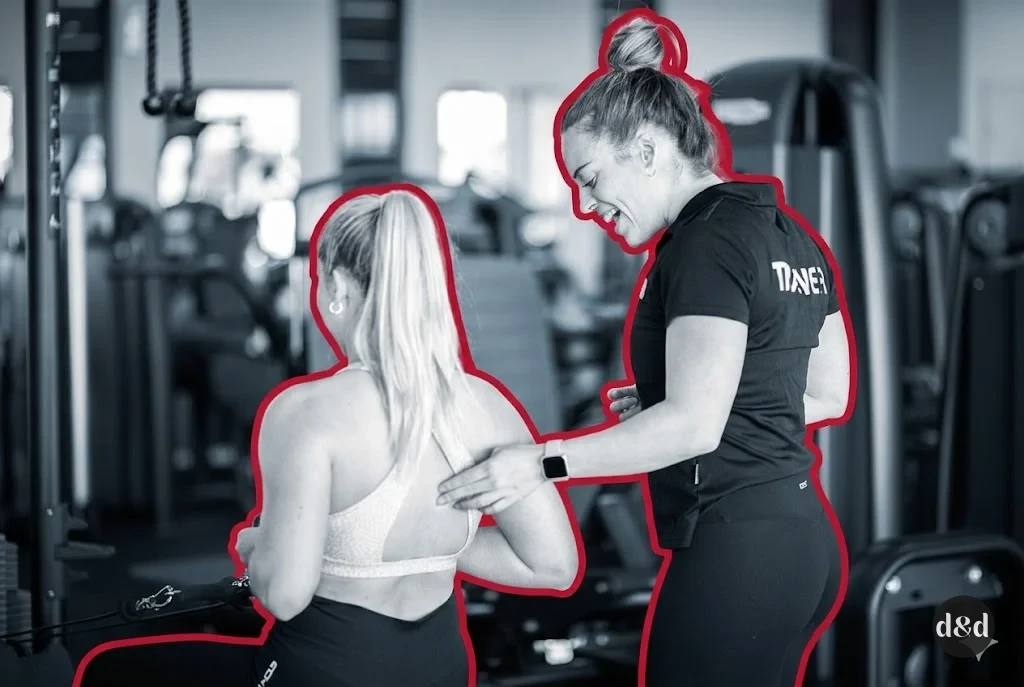
Walk through any gym in Bondi, Surry Hills, or the CBD and you’ll notice something: the trainers glued to their phones between sets aren’t scrolling Instagram for fun. They’re running businesses.
The personal training industry has fundamentally shifted. The average PT in Australia earns around $32 per hour trading time for money on the gym floor. But the ones building real wealth? They’ve stacked technology into systems that generate income whether they’re training clients or sleeping.
This is the PT tech stack: the collection of tools, platforms, and digital infrastructure that transforms a fitness qualification into a scalable business.
The evolution: From gym floor to digital empire
Every successful trainer follows roughly the same trajectory, whether they realise it or not.
It starts with Instagram. Not as a business strategy, but as a quasi-personal blog. You post your own training, maybe some meal prep, a few transformation shots. The handle is usually something like @sam.fit or @coach_marcus: an alter ego that feels separate from your personal identity.
Then the DMs start coming. “What program are you running?” “Can you write me a meal plan?” “Do you do online coaching?”
This is the inflection point. Most trainers either ignore it or handle everything manually through WhatsApp and Google Sheets. The smart ones recognise it for what it is: market validation.
What follows is a predictable stack-building process. Each layer solves a specific problem and unlocks new revenue potential.
Layer 1: The foundation: All-in-one coaching software
Your coaching platform is your operating system. Everything else plugs into it.
The market has consolidated around a few major players, each with distinct strengths:
My PT Hub has become popular among Australian trainers for its comprehensive feature set. The platform includes a 7,500+ exercise video library, nutrition planning with 650,000+ food items, automated check-ins, and white-label app options. Critically, it offers unlimited clients: you’re not penalised for growing.
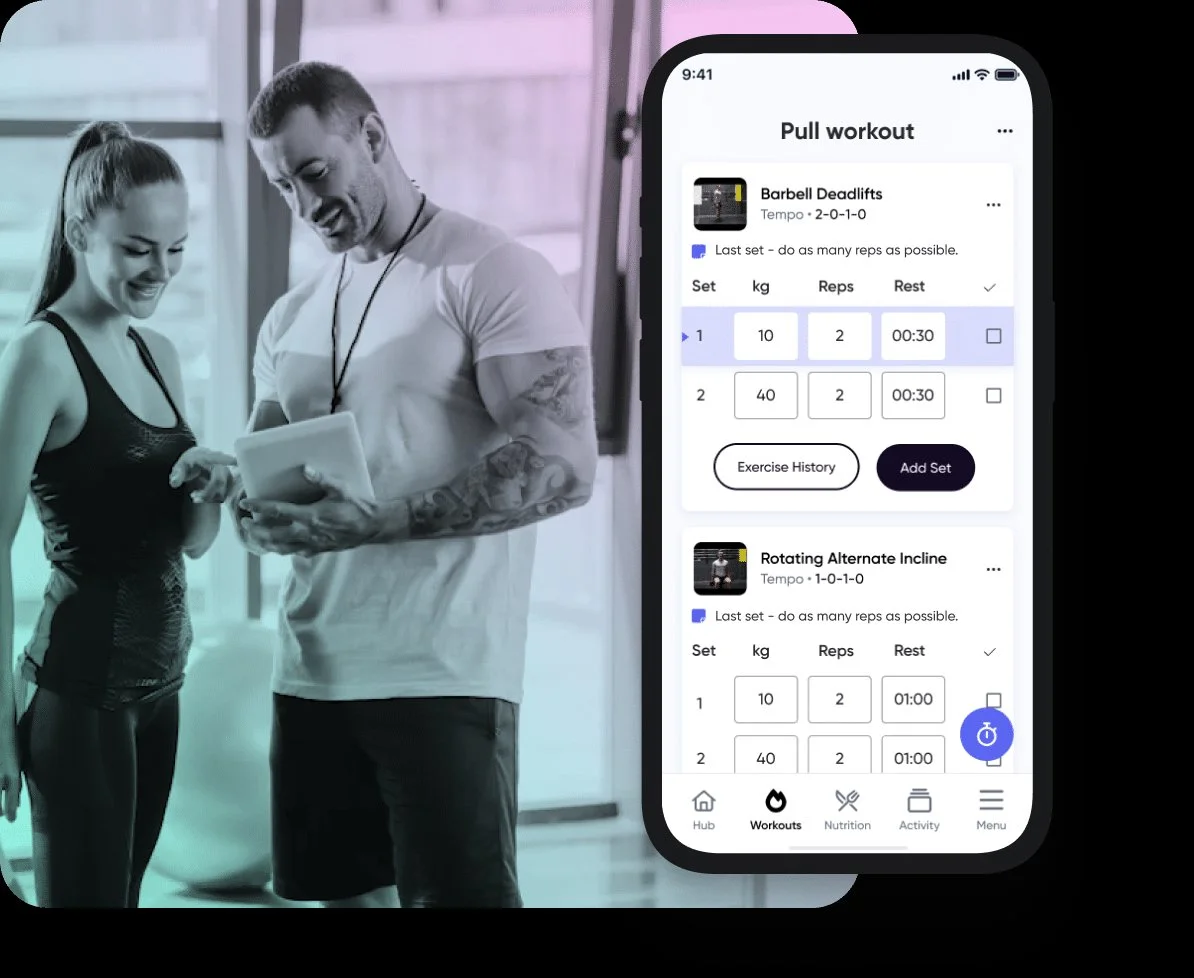
ABC Trainerize excels at client engagement through its mobile app, with strong workout planning features scoring 9.4 on user reviews. It integrates well with wearables and offers customisable branded experiences.
TrueCoach has carved out the strength and conditioning niche. If you’re working with athletes or serious lifters, its robust progress tracking and 1,200+ exercise video library make it the go-to choice. Plans run from around $20 to $107 monthly depending on client numbers.
Everfit positions itself for growing businesses with solid automation tools and business analytics: worth considering if you’re scaling beyond the solo trainer model.
The platform you choose matters less than choosing one and committing. The trainers who struggle are the ones cobbling together five different apps, losing client data between platforms, and spending hours on admin that software handles in minutes.
Layer 2: Content and credibility infrastructure
Before anyone pays you for coaching, they need to trust you. In 2026, trust is built through content.
The Instagram ecosystem remains central. But the game has evolved beyond posting workout clips. The trainers building real businesses understand the content hierarchy:
Stories for daily engagement and personality. Reels for reach and algorithm favour. Carousels for education and saves. Grid posts for brand consistency and credibility.
The before/after transformation post is still the single most powerful piece of social proof in fitness. But the ethical trainers are getting smarter about how they present these: focusing on strength gains, habit changes, and lifestyle improvements rather than purely aesthetic metrics.
YouTube long-form content has become the ultimate differentiator. While Instagram is saturated with 30-second clips of bicep curls, YouTube allows you to demonstrate genuine expertise. A trainer who can hold attention for 15 minutes explaining periodisation or nutrition timing is signalling a depth of knowledge that justifies premium pricing.
Email lists represent owned audience. The trainers who understand the “rent vs own” concept are building subscriber lists aggressively. Instagram can change its algorithm tomorrow. Your email list is yours forever.
Layer 3: Payment and business operations
This is where many trainers leave money on the table.
Stripe has become the default payment processor, integrating with most coaching platforms. The trainers maximising revenue have moved beyond single-session billing to:
Recurring subscription models (typically $150-$300/month for online coaching)
Package deals (12-week transformations at $800-$1,500)
Hybrid offerings (weekly check-ins plus one in-person session monthly)
Automated invoicing through your coaching platform eliminates the awkward “hey, can you pay me?” messages. Set up recurring billing and let the system handle it.
ABN and business structure matters more than most trainers realise. Operating as a sole trader is simple but offers no asset protection. Many successful PTs eventually move to a company structure as their income grows: worth discussing with an accountant once you’re consistently earning above $100k.
Layer 4: Digital products and passive income
The digital products market hit $123 billion in 2025 and is projected to triple by 2030. For personal trainers, this represents the shift from trading time for money to building assets.
Workout program PDFs are the entry point. A well-designed 12-week program can sell for $30-$80 and requires zero ongoing time once created. The best-selling programs solve specific problems: “8-Week HYROX Prep,” “Post-Pregnancy Return to Training,” “Desk Worker Mobility Fix.”
Nutrition guides and meal plans face more regulatory complexity in Australia (you need appropriate qualifications to provide detailed nutrition advice), but general healthy eating guides and recipe collections remain fair game.
Online courses represent the premium tier. A comprehensive course on training fundamentals, priced at $200-$500, can generate significant passive income. Platforms like Teachable, Kajabi, or even Notion make course creation accessible.
Subscription communities through platforms like Skool or Circle allow trainers to monetise their audience at scale. A $20-$50/month membership with group coaching, community access, and exclusive content can quickly compound into substantial recurring revenue.
The saturation problem (and how to escape it)
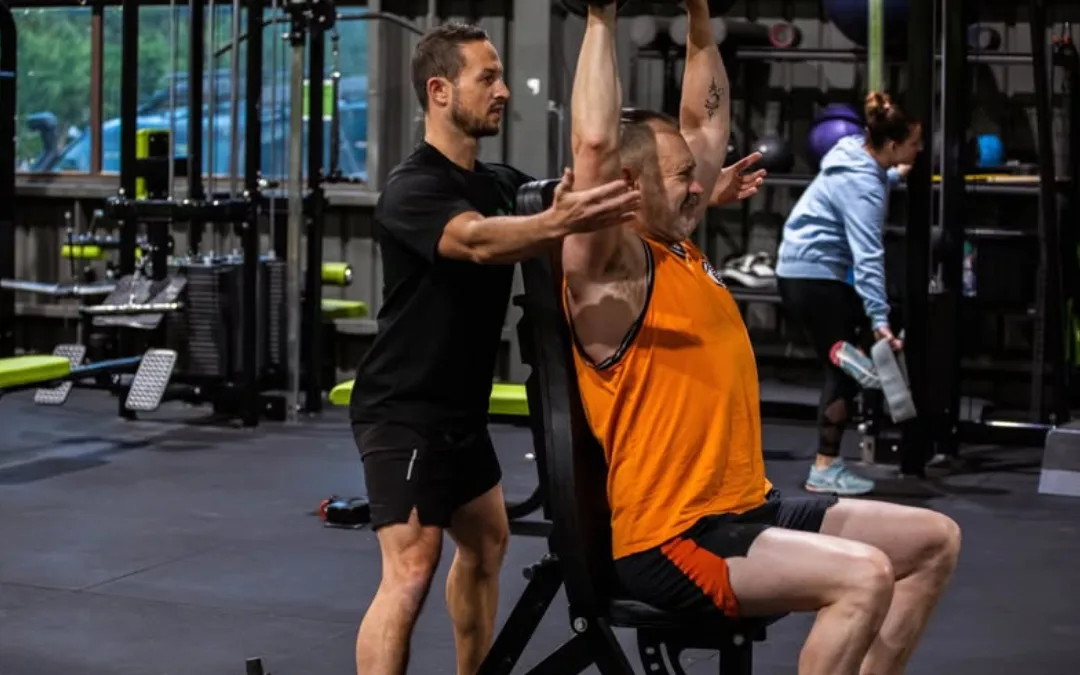
Here’s the uncomfortable reality: the fitness influencer market is brutally saturated.
Everyone goes to the gym. The information on how to train effectively isn’t secret: it’s freely available across thousands of YouTube videos, Reddit threads, and fitness apps. The barrier to entry for becoming a PT is a few thousand dollars and a few months of study.
This creates intense competition for attention and clients. The trainers who break through do so by finding underserved niches:
Demographic specialisation: Pre/post-natal training, over-50s fitness, adaptive training for disabilities
Sport-specific coaching: HYROX (Sydney trainers are reportedly earning $2,000+/month just from HYROX prep), marathon running, surf fitness
Geographic opportunity: Western Sydney remains underserved compared to the Eastern Suburbs. As the new airport development brings population growth, early movers in areas like Parramatta, Liverpool, and Penrith face less competition
Methodology depth: Becoming genuinely expert in one area (Olympic lifting, powerlifting, calisthenics) rather than being a generalist
The differentiation that matters most, however, is trust and connection. In a world of AI-generated content and cookie-cutter programs, real human relationship becomes the premium.
The elephant in the gym: PEDs and ethical marketing
We need to talk about steroids.
The fitness influencer space operates under a pervasive dishonesty. Studies suggest over half of fitness influencers use performance-enhancing drugs while claiming “natural” results. Australian fitness influencer Jaxon Tippet, who openly discussed his past steroid use, died of a heart attack at 30: a known risk linked to anabolic steroids.
Non-medical anabolic steroid use in Australia nearly tripled between 2001 and 2019. SARMs are now the most commonly detected performance and image enhancing drug in Australian sports.
This creates a genuine ethical dilemma for trainers building their personal brand. The incentive structure is perverse: enhanced physiques generate more engagement, more followers, and more clients. Honesty about natural limitations can feel like competitive disadvantage.
The trainers building sustainable businesses are increasingly choosing transparency. Not necessarily discussing their own choices publicly, but being honest about realistic timelines and results. Setting expectations that don’t require pharmaceutical assistance to achieve. Building trust through authenticity rather than aspirational imagery that may be chemically enhanced.
The long game favours integrity. Clients eventually recognise when their results don’t match the marketing. The trainers who survive are the ones whose promises align with deliverable outcomes.
The meta-game: Selling to trainers
Here’s the real gold rush insight: the most profitable businesses in fitness aren’t training clients. They’re training trainers.
This is the “selling shovels during the gold rush” model. Accounts like PT Business Academy have built substantial followings teaching other PTs how to build their businesses. Coaching certification programs, business courses for trainers, done-for-you program templates: all of these target the aspirational trainer market.
If you’ve successfully built your own PT business, your next evolution might not be more clients. It might be teaching your system to other trainers.
The stack in action: What implementation looks like
For a Sydney trainer starting from zero, here’s a practical rollout sequence:
Month 1-3: Foundation
- Obtain Cert III/IV in Fitness (or equivalent qualification)
- Set up ABN and professional indemnity insurance
- Create Instagram presence with consistent posting schedule
- Start building email list with lead magnet (free workout guide)
Month 4-6: Systematise
- Choose and implement coaching platform (My PT Hub, Trainerize, or TrueCoach)
- Set up Stripe for automated payments
- Create first digital product (8-12 week program PDF)
- Develop 3-4 signature content pieces for YouTube
Month 7-12: Scale
- Launch online coaching offering ($150-$250/month)
- Build out program library with niche-specific offerings
- Consider community platform for group coaching
- Evaluate white-label app options for brand elevation
Year 2+: Leverage
- Develop comprehensive online course
- Explore trainer-to-trainer educational content
- Consider expansion into group programs or retreats
- Evaluate business structure and tax optimisation
The personal training industry is splitting in two: gym floor trainers trading hours for dollars, and trainer-entrepreneurs building digital assets that generate income independent of physical presence. The technology stack isn't complicated. The platforms exist. What separates the two groups is simply the decision to start stacking.
Key Takeaways
The personal training industry is bifurcating. On one side: gym floor trainers trading hours for dollars, competing on price, vulnerable to cancellations and seasonal fluctuations. On the other: trainer-entrepreneurs building digital assets, serving clients globally, and generating income independent of physical presence.
The technology stack isn’t complicated. The platforms exist. The playbook is clear.
What separates the trainers building real businesses from those stuck on the floor is simply the decision to start stacking: then the discipline to keep building, one layer at a time.
The fitness tech landscape evolves rapidly. Platforms mentioned in this article may change features and pricing. Always verify current offerings before committing to a platform.
The real tech stack is the one AI can read
The trainers earning well have already realised their tech stack is the business, not the gym floor. The next unlock is making that stack legible to AI. Programs, pricing, client intake, content, all in a form a model can reason about.
Generative AI can draft programs, run client check-ins, produce content, reply to DMs, and help plan launches. It can be a credible junior coach. The only gap is it doesn't know your methodology, your clients, or your voice.
That's what we do at jopy.agency. We audit how your coaching business runs and produce structured files: Brand-Positioning.md, Service-Blueprint.md, Customer-Journey.md, Content-Framework.md (to name a few).
What are Structured .md files?
Markdown (.md) is the cleanest and smallest file format that AI likes to read.
We audit businesses end to end, your operations, workflows, brand, customers, tech, etc., then write all of it into structured .md files.
Then you can use these structured .md files so ChatGPT, Claude, Gemini, or any chat-based LLM can read your business context properly for future, in-house vertical growth.
You can then use AI in-house for content creation, client check-ins, program updates, scaling your technical stack, or whatever gives you the most leverage.
Interested in AI Context Auditing? Visit Jopy.agencyInterested in AI Context Auditing?Cite This Article
APA 7THReferences
Formatted in APA 7th Edition
- My PT Hub. (2026). Personal Training Software. https://www.mypthub.net/
- ABC Trainerize. (2026). Personal Training App. https://www.trainerize.com/
- TrueCoach. (2026). Online Coaching Platform. https://truecoach.co/
- Stripe. (2026). Payment Processing for Internet Businesses. https://stripe.com/au